From Invitation to Solitude and Silence: Experiencing God's Transforming Presence, by Ruth Haley Barton.
Blaise Pascal, the remarkable scientist, theologian and Christian of the 17th Century, acutely remarked in his Pensees or “Thoughts” (section 136) that “all the unhappiness of men arises from one single fact, that they cannot stay quietly in their own room.” The reason for this inability, he found, is “the natural poverty of our feeble and mortal condition, so miserable that nothing can comfort us when we think of it closely.” So we have to be careful not to “think of it closely.” This we manage by what Pascal calls “diversion.” We require things to distract us from ourselves: “hence it comes people so much love noise and stir; hence it comes that the prison is so horrible a punishment; hence it comes that the pleasure of solitude is a thing incomprehensible.”
True, Pascal observes, we have “another secret instinct, a remnant of the greatness of our original nature, which teaches that happiness in reality consist only in rest, and not in being stirred up.” This instinct conflicts with the drive to diversion, and we develop the confused idea that leads people to aim at rest through excitement, “and always to fancy that the satisfaction which they do not have will come to them, if, by surmounting whatever difficulties confront them, they can thereby open the door to rest.”
Of course it doesn’t come that way. That is the fallacy in the thinking that all one needs is more time. Unless a deeper solution is found, “more time” will just fill up in the same way as the time we already have. The way to liberation and rest lies through a decision and a practice.
The decision is to release the world and your fate—including your reputation and ‘success’—into the hands of God. This is not a decision to not act at all, though in some situations it may come to that. It is, rather, a decision concerning how you will act: you will act always in dependence upon God. You will take charge of outcomes. You will do your part, of course, but “your part” will always be chastened by a sense of who is God—not you!
When King Saul assumed the priestly role and offered sacrifices rather than wait for Samuel (I Samuel 13:8-12), he decided to “make things happen.” He trusted the “arm of the flesh” or natural abilities to get his way. With almost no exception that was the way of the kings in the Old Testament. But it isn’t just for kings. The choice to do what we know to be wrong is always of this nature.
Now a decision to release the world and our fate to God runs contrary to everything within and around us. We have been “had” by a system of behavior that was here before we got here and seeps into every pore of our being. “Sin,” Paul tells us, “was in the world,” even before Law came. It is a massive social presence that forms us internally as well as pressures us externally. Hence we must find helps. We must learn to choose things we can do that will meet with God’s actions of grace to break us out of the system that permeates us. These ‘things’ are the disciplines for life in the Spirit, well-known from Christian history, but much avoided and misunderstood. For those who do not understand our desperate situation, these disciplines look strange or even harmful. But they are absolutely necessary for those who would find rest for their soul in God, and not live the distracted existence Pascal so accurately portrays.
The person capable of “staying quietly in their own room” is (barring some abnormal condition) a person who has found a good that is sufficient to them and is unthreatened by anything that might happen. The tendencies to take charge of the world that inhabited their physical and spiritual dimensions no longer have power to govern them or upset them. They have learned by experience and grace that all is perfectly safe in God’s hands. Now they can be active, if that is called for, but even then they act with settled love, joy and peace.
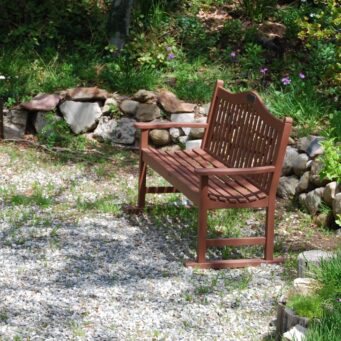
Solitude and silence are the most radical of the disciplines for the spiritual life, because they most directly attack the sources of human misery and wrong-doing. To be in solitude is to choose to do nothing. For extensive periods of time. All accomplishment is given up. One learns “hands off.” Silence is required to complete solitude, for until we enter quietness, including not listening and speaking, the world still lays hold of us. When we go into solitude and silence we even stop making demands upon God. It is enough that God is God and we are His. We learn we have a soul, that God is here, that this world is “my Father’s world.”
When we practice solitude and silence adequately, this knowledge of God progressively replaces the rabid busyness and self-importance that drives most human beings, including the religious ones. It comes to possess us no matter where we are. We no longer need to be in outward solitude and silence in order for them to be in us. Now, “Whatever we do, in word or deed, we do in the name of the Lord Jesus, giving thanks to God the Father through him” (Col. 3:17). And that is not another job on top of everything else we have to do. It is not, really, something we have to think to do. For it is who we have become. We still need to attend to solitude and silence, cultivate it, from time to time renew its depth and strength by going alone and being quiet. But we carry them with us wherever we go.
In the contemporary context (especially the religious context) someone needs to tell us about solitude and silence—just to let us know there are such things. Someone then needs to tell us its okay to enter them. Someone needs to tell us how to do it, what will happen when we do, and how we go on from there. For Ruth Barton it was her spiritual director. Now Ruth does that for you.
If you would really like to know the “rest appropriate for the people of God” (Heb. 4:9), then make the decision to leave all outcomes to God and enter the practice of solitude and silence with Ruth Barton as your guide. As you do so, call upon Jesus to be with you, and trust him for that. In a relatively short period of time you will come to know the “rest unto your souls” promised by him who is meek and lowly of heart. It will become the easy and unshakeable foundation for your life and your death.
Photography: Becky Heatley
The resources on this website are freely available here because of the generous gifts of our supporters.