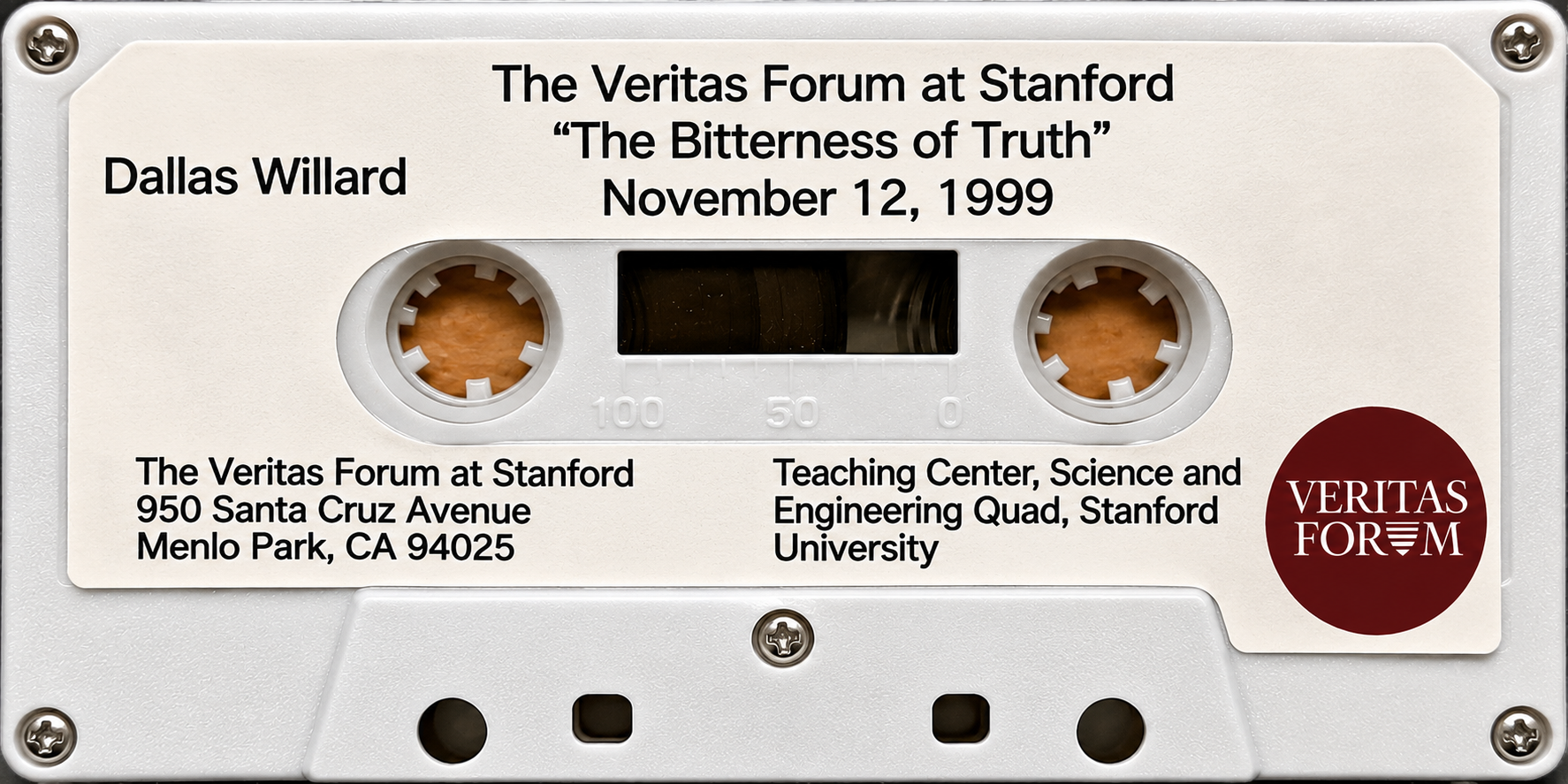
The Bitterness of Truth

November 12, 1999
The Veritas Forum at Stanford

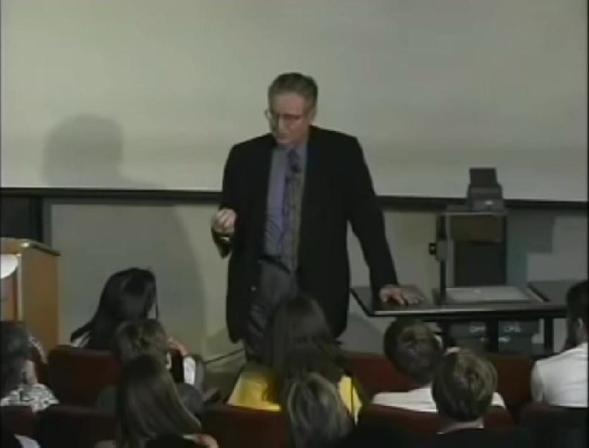
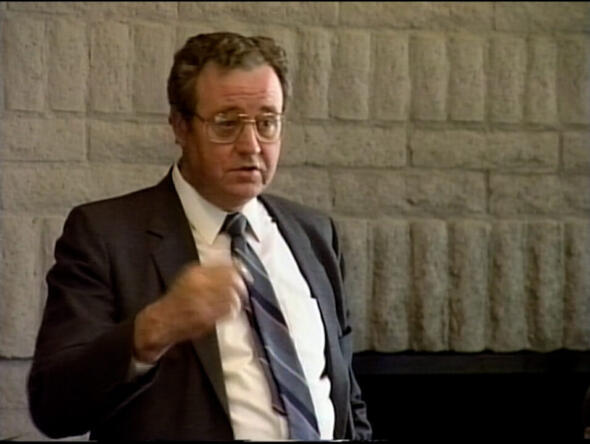
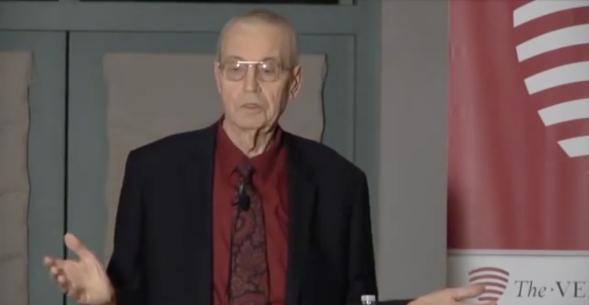
In November 1999, the Veritas Forum at Stanford University brought together scholars, Christian thinkers, and professionals to explore the nature of truth and its implications for human life. Dallas spoke on "The Bitterness of Truth," examining why truth is essential yet often difficult to accept. An extensive Q&A session follows his lecture.

We are especially grateful to Ray Cowan, who attended this Veritas Forum presentation in November 1999 and preserved the original cassette recording for more than 26 years. Ray rediscovered the recording in January 2026, generously made it available to us, and patiently helped shepherd it through the recovery and digitization process. His personal recollections of that evening have also provided valuable historical context for this recording.

Our sincere thanks also go to Seth Bollinger, Dan Cho, and the team at the Veritas Forum for digitizing the original cassettes and graciously allowing Dallas Willard Ministries to share this recording. We are equally grateful to André du Toit for his careful audio restoration, helping make Dallas's words more accessible to listeners today.

Resources

The Bitterness of Truth

Why can something so essential to life be so difficult to accept? Dallas sheds light on the uncomfortable reality that truth does not bend to our wishes, challenging us to examine what we believe, how we make decisions, and whether we are willing to follow truth wherever it leads.
The resources on this website are freely available here because of the generous gifts of our supporters.

Give
Download & Listen Offline

The Bitterness of Truth

Highlights:

  • The Bitterness of Truth: Why reality can be so difficult to accept when it refuses to conform to our wishes and desires.
  • Belief Is Not Truth: The crucial distinction between what we personally believe and what is actually true, regardless of our convictions.
  • Life's Four Great Questions: What is real, who is well-off, who is a good person, and how we become good—explored through Jesus' teachings on the Kingdom of God.
  • The Finality of Our Choices: The irreversible nature of human action and the ways our decisions shape the people we are becoming.
  • Truth, Knowledge, and Humility: The dangers of claiming perfect knowledge, particularly when truth is used to justify coercion, injustice, or the exercise of power.
  • Truth Without Coercion: The importance of pursuing truth through love, community, and humility rather than imposing our beliefs on others.